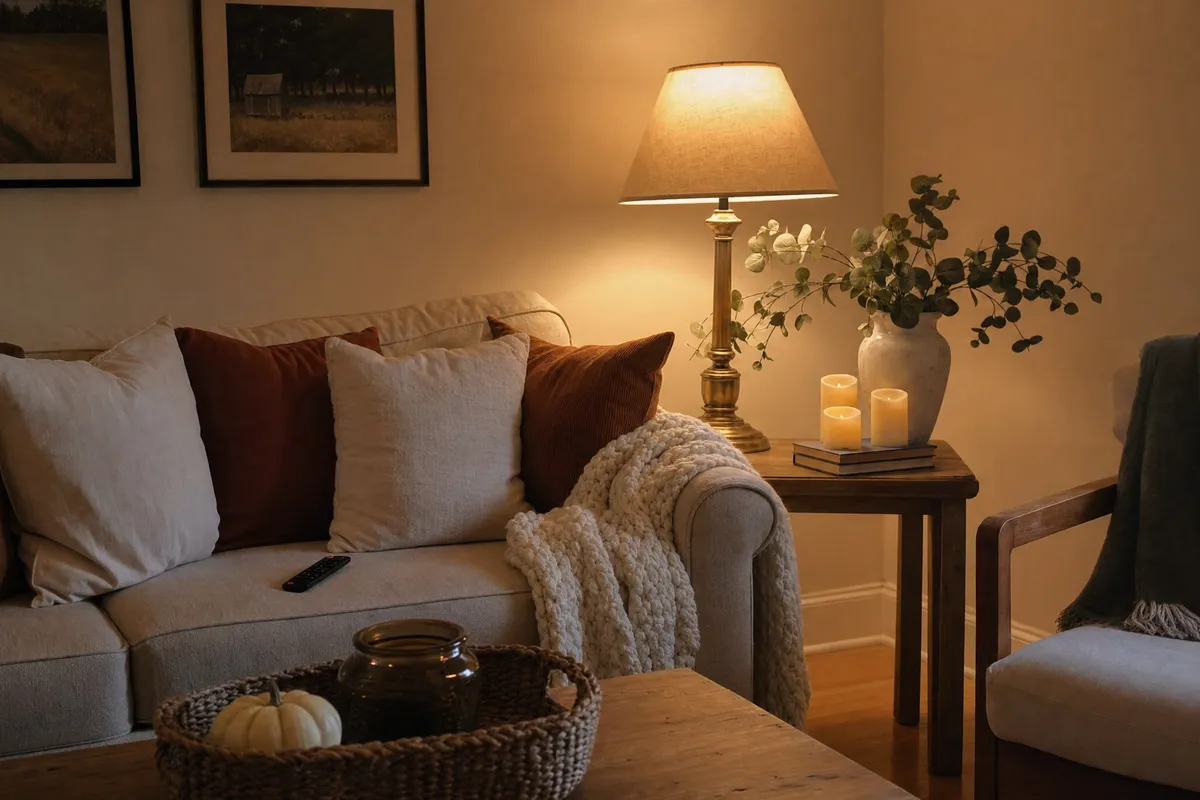
Start with the seat you use after dark. Turn on the nearby lamp, sit down and notice what is missing: enough light to read, a throw within reach or simply somewhere to put your cup. Solve that corner before buying decorations for the whole living room.
The five layers below are a suggested order for making those decisions. You can stop after any layer. Your total depends on what you choose to buy.
1. Check the lamp you already use
Look at the bulb packaging or specification for its color temperature and brightness. The U.S. Department of Energy describes 2700K light as warm and 3000K as soft. Lumens describe light output; the Kelvin number describes color appearance. A lower color temperature does not by itself mean a dimmer bulb.
For a fall corner, try warm light if you like that appearance. Keep enough light for reading and moving around the room. You don’t need to turn off useful overhead lighting to follow a decorating scheme.
Check the fixture’s requirements before changing bulbs. For an enclosed fixture, the DOE advises checking that the bulb is approved for that use. If you use a dimmer, choose a dimmable bulb compatible with the dimming system. Follow the fixture instructions for bulb type and maximum wattage as well.
Take a picture of the current bulb’s label before shopping. Bring the lamp model or its instructions into the decision if you are unsure about fit. A new lamp can wait until you know whether the existing one does the job.
2. Put one useful throw within reach
Try a blanket from another room before buying a seasonal one. Fold it over the sofa arm or place it where you can reach it from your usual seat. Use it for an evening. If it scratches, slips off constantly or feels too warm, change the fabric choice before worrying about its color.
For a quiet fall palette, try camel, rust or deep green against your existing upholstery. A cream throw can work if the room already has the color you want.
If you buy one, check its dimensions and care label. A small decorative throw and a blanket that covers you while sitting may serve different needs. Measure against a blanket you already find comfortable instead of judging size from a staged photograph.
3. Change a cushion cover only if it fits
Measure the insert and check the cover maker’s sizing guidance. Don’t assume that every cover labeled “throw pillow” fits the inserts on your sofa.
Try one or two covers in a color repeated elsewhere in the room. Keep the current cushions nearby while you compare the arrangement in daylight and under the lamp. If the existing covers already suit it, leave them.
Make room for the covers you remove. If the seasonal change creates a bag that has to live on the floor, reduce the number of swaps. The linen closet organization guide can help you plan a storage location before adding more textiles.
4. Make one small seasonal arrangement
Choose a vase or bowl you already own and one place where it won’t interrupt daily use. Try a few faux stems or small decorative pumpkins. Adjust the arrangement from the seat where you will see it, then check it from the doorway.
Leave your normal cup, book or remote on the surface during this trial. That shows how much space is actually available. If stems brush your face when you reach for the cup, use a shorter arrangement or move it elsewhere.
Keep loose decorations and breakable containers out of children’s reach and away from pets that may pull them down.
5. Use flameless candles for a decorative glow
For candle-shaped accents, choose battery-operated flameless candles. The U.S. Fire Administration recommends considering them and says real candles should stay at least 12 inches from anything that can burn.
This arrangement uses flameless candles only. Place them where you can reach their switches and follow the product’s battery and placement instructions. Check the model before expecting a timer or remote; those features are not universal.
Set the arrangement beside the normal lamp and decide whether the extra glow is worth keeping. It is decoration, so don’t rely on it to provide reading light or illuminate a walkway.
Set a spending cap after the trial
Use the table to decide what remains missing. On a separate shopping list, record the exact item and its current price, including delivery and tax where applicable.
| Layer | Try first | Buy only if |
|---|---|---|
| Lighting | Existing lamp with a suitable bulb | It does not provide the light you need |
| Throw | A blanket from another room | Its size or feel doesn’t work for this seat |
| Cushion covers | Your current covers | You want a color change and the new covers fit |
| Seasonal arrangement | An existing bowl or vase | There is a usable spot for the decoration |
| Flameless glow | Leave the surface as it is | You still want that optional accent |
For example, if your spending cap is $40 and you have already committed $25, you have $15 left. If the next item costs more than the remaining money, postpone it or remove another planned purchase.
Keep a separate line for batteries or other required extras. Compare the delivered total with the cap before placing an order.
Check the room in use
Sit down with the things you normally use there. Reach the lamp switch, put down a cup and walk past the chair. Keep cords out of the walking route and preserve access to doors and heaters according to their requirements.
For anything you buy, keep the receipt until you have tried it during an ordinary evening.
Correction: This guide replaces unsupported retail-price estimates and a first-person product-use claim. The budget example is now explicitly illustrative, and the lighting advice distinguishes color temperature from brightness.