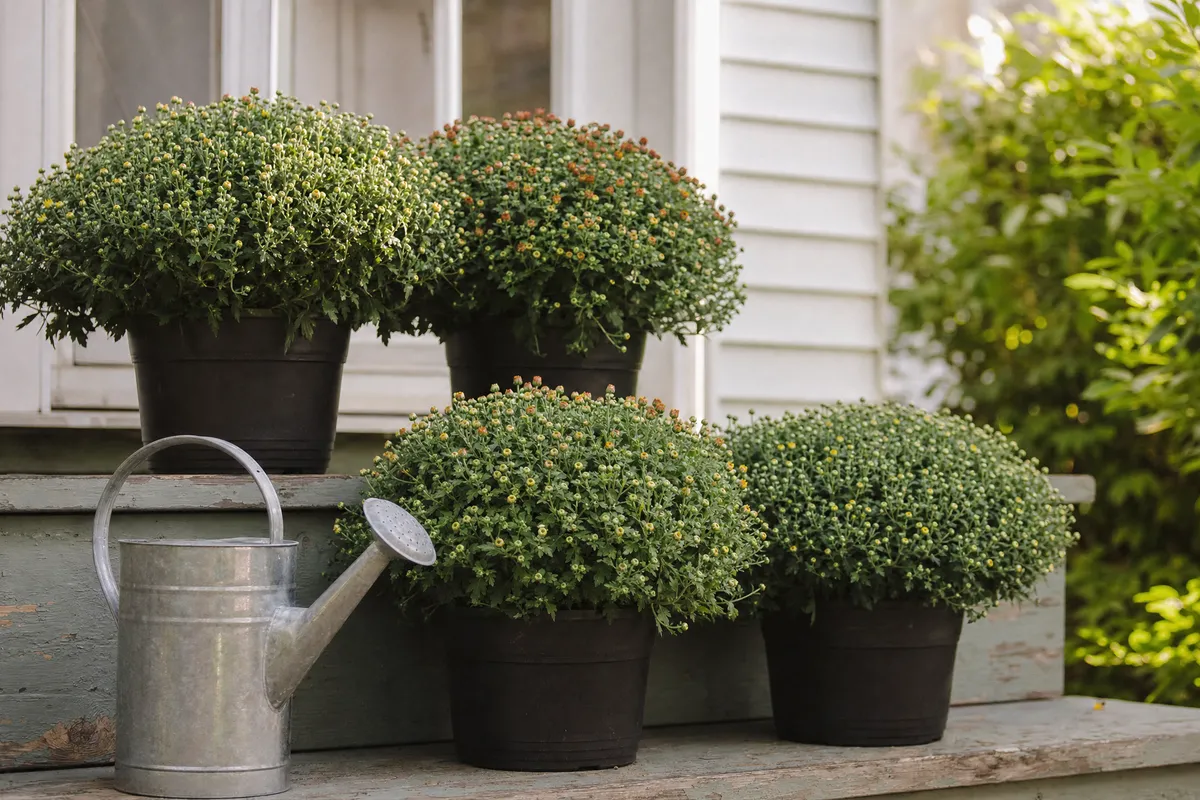
Most porch mums die of two causes: they were the wrong kind of mum, or they missed one watering. Both are preventable at the store, before you’ve spent anything. This is the whole lifecycle, from the garden-center decision to what November actually looks like.
At the store: two kinds of mum, one label
Garden centers sell two different plants under the name “mums,” and the tag rarely helps. Garden mums (also called hardy mums) are bred as perennials, root-hardy roughly in zones 5 through 9. Florist mums are the same species bred for big showy blooms and zero cold tolerance; the University of New Hampshire’s extension is blunt that they’re “not bred for hardiness” and late-season buys should be treated as annuals.
For a porch display that only needs to last through fall, either works. If you harbor any hope of planting them afterward, ask for garden mums specifically, and know the odds are still against you (see the last section).
Four buying rules:
- Buy in tight bud, not in bloom. Plants showing mostly green with a hint of color give you the full four to eight weeks of display. Fully bloomed plants at the store are already partway through their bloom window.
- Timing: mid-August through mid-September, and Labor Day weekend is reliably the price bottom. Lowe’s ran 3-quart pots at two for $8 in 2025; Home Depot dropped theirs to $2.50.
- Prices: standard 3-quart pots run $4 to $7 at Home Depot, Lowe’s, Walmart, Aldi, and Trader Joe’s. Jumbo pots run $15 to $25 (Walmart’s 16-inch is $19.97). Four standards clustered in pairs cost about $24 and fill a porch corner nearly as well as two jumbos at $40.
- Bigger pots last longer. Growers’ own numbers: a 4-inch mum gives roughly three to six weeks of bloom; a 10-inch pot staggers its buds over four to eight. The little ones are short-term decor.
On the porch: sun and water
Mums need a lot of both. Six hours of direct sun minimum, per both Iowa State and Clemson’s extension services. A north-facing porch will keep a blooming mum alive but won’t open the remaining buds, which defeats the tight-bud trick.
Water is the daily chore. Potted mums are usually root-bound and dry out faster than anything else on the porch: check every day, water when the top of the soil feels dry, and keep going until water runs out the drainage holes. Clemson’s guidance: letting them wilt “will end the show.” A mum that collapses hard once limps along afterward.
If daily checking sounds unrealistic, that root-bound problem has a fix growers recommend: slide the plant out and repot it into a container one size up with fresh potting mix. The extra soil holds enough water to cover a missed day. (This one comes from grower consensus rather than the extension services, but the root-bound diagnosis is easy to confirm; if the roots circle the pot in a solid mat, it needed the upgrade.)
Extending the show
Deadheading works and costs nothing. Pinch or snip spent flowers off just above the next set of leaves; North Carolina’s extension service confirms it keeps plants blooming longer as well as tidier. Ten minutes a week, and the display runs weeks past the neighbors’.
Temperature is the other lever, and it explains a mystery: mums last dramatically longer in cool weather. The same plant that holds six weeks in a 60-degree October burns through its bloom in two during a warm September. Nothing to do about it except buy later rather than earlier if your falls run hot.
What happens in November
Here’s the part most mum content skips. Iowa State’s extension says fall-planted garden mums “usually don’t survive the winter even when given winter protection.” The roots need four to six weeks to establish before frost, and an October planting doesn’t leave them that. Freeze-thaw cycles heave the shallow roots right out of the ground.
Your realistic options, best odds first: compost them without guilt (they cost less than the pumpkins), overwinter the pot in an unheated garage with occasional water, or plant them immediately after buying in early September with 3 to 4 inches of loose mulch and stems left standing, in zone 5 or warmer, with garden mums only. Spring-planted mums from the garden section survive at far higher rates, but that’s a different purchase for a different article.
I compost mine and don’t feel bad about it. Six good weeks on the porch for five dollars was the deal I signed up for.
Mums FAQ
How many mums does a porch actually need? Two large or four standard pots, arranged asymmetrically (two one side, one or two the other, with the pumpkin stack between). Past that the porch disappears behind the plants.
Why are my mum’s buds not opening? Not enough sun, most often. Sometimes the plant was sold too tight; give it two sunny weeks before blaming the grower.
Can I keep a mum indoors? As a short-term display, yes, in the sunniest window you own. They’re outdoor plants at heart and stretch and sulk inside, so it’ll last longer on the porch.
Are mums toxic to pets? Yes, chrysanthemums are toxic to dogs and cats per the ASPCA list, causing drooling and stomach upset if eaten. Porch height beats floor level in a household with a plant-chewing dog.