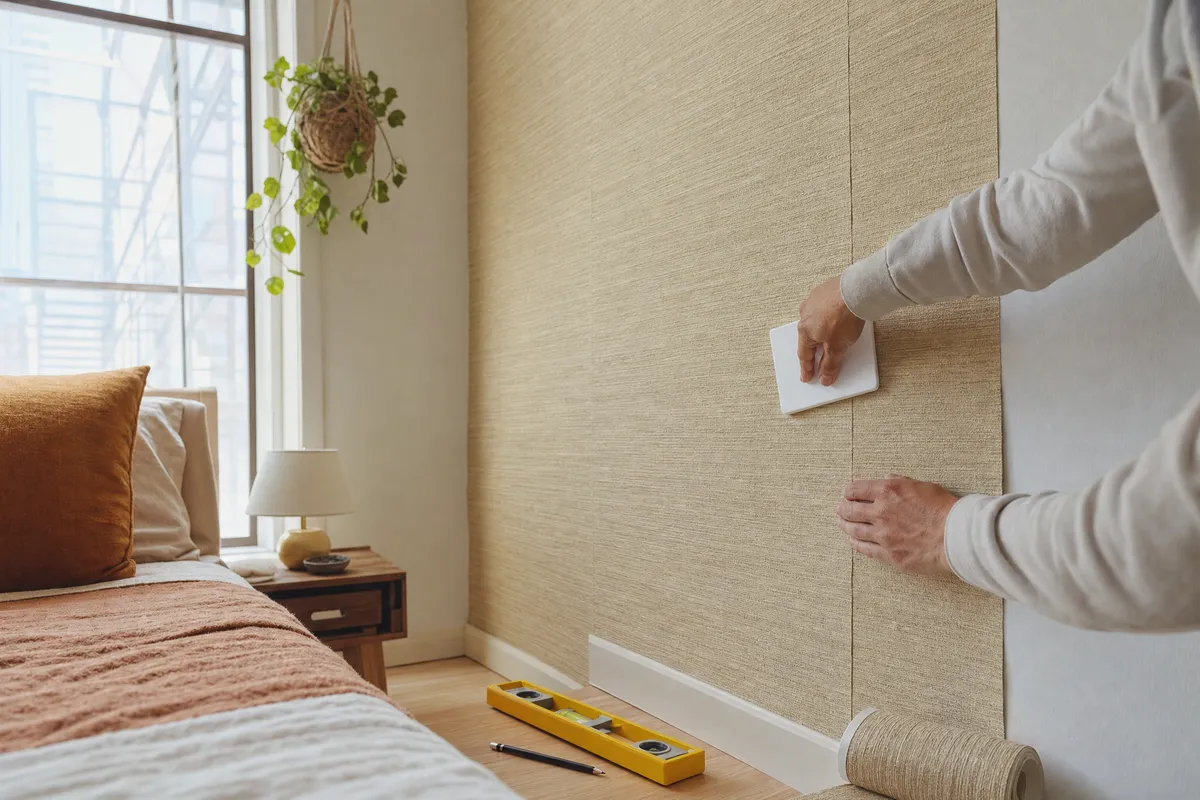
Peel-and-stick wallpaper either transforms a rental or repaints it on your way out, and which one you get is decided before the first strip goes up. The short version: test your paint, buy one more roll than the math says, overlap the seams slightly because the manufacturers say so, and keep it out of the shower’s splash zone. The long version follows.
The gate: test your paint first
This site has said it before and it bears the repeat, because it’s the difference between a deposit and a repainting bill: Tempaper’s own guidance warns against flat, matte, and low-sheen paint, where the adhesive soaks into the chalky surface and pulls paint off at removal. Rental walls are usually flat-painted.
The test: order a sample ($3 to $5 for Tempaper samples at Home Depot, or direct from the manufacturers; Target doesn’t do samples), stick it somewhere hidden, and leave it a full week. Pull it slowly. Clean wall, proceed. Paint flecks on the sample, stop; a fabric wall hanging on adhesive hooks is your accent wall this year.
The week matters, because a ten-minute test only proves the adhesive hasn’t settled in yet.
The roll math
Standard rolls are 20.5 inches wide by 18 feet long, about 31 square feet. With 8-foot ceilings, each roll yields two full-height drops, and the arithmetic for common accent walls works out to:
- 10-foot wall: six drops, 3 rolls
- 12-foot wall: eight drops, 4 rolls
Busy patterns with large repeats waste more in matching, which is where the standard buy-10-to-20%-extra advice comes from. Practically: buy the extra roll, keep it sealed, return it if the wall goes smoothly. An accent wall in NuWallpaper ($26 to $46 a roll at Home Depot) lands around $80 to $180; Tempaper runs higher.
The texture-look lines are the best value in rentals: grasscloth-look rolls run $35 to $60 at Lowe’s, and beadboard-look (NextWall’s is $34.99) fakes wainscoting in an afternoon. Real grasscloth is unhangable in a rental and real beadboard involves a nail gun, which is exactly why the fakes are worth it.
Hanging it: the two instructions everyone skips
First, don’t trust the corner of your wall to be straight, because it isn’t. Both NuWallpaper and Tempaper’s official instructions say to draw a plumb vertical guide line for the first strip rather than aligning to the corner. A level, a pencil, two minutes, and every strip after the first lines up automatically.
Second, and this one surprises people: overlap the seams slightly. Butting strips edge-to-edge feels tidier, but NuWallpaper’s instructions specify about a millimeter of overlap and Tempaper says a sixteenth of an inch, because vinyl shrinks back a hair as it settles and temperature-cycles, and butted seams open into gaps. The overlap is invisible at arm’s length and it’s the manufacturer-endorsed move.
Work top to bottom, peel the backing a few inches at a time, and push air out from the center with a smoother or an old gift card. Bubbles that escape anyway get a pin prick and a press.
Getting it off in one apartment-saving piece
Removal is the step the whole product category gets judged on. The technique from Tempaper’s care guide: peel from a corner, slowly, at a low angle. Where it resists, a hair dryer held about six inches away for fifteen to twenty seconds softens the adhesive and the strip releases. Warm, don’t cook.
Do the removal on a mild day rather than a cold one (cold adhesive grips harder), take your time, and the wall behind should need nothing but a wipe. If the sample test passed at move-in, this step goes exactly as advertised; every horror story traces back to skipped testing or years-old paint.
Bathrooms and other humid rooms
Vinyl peel-and-stick is non-breathable, and Tempaper’s own bathroom guidance is comfortable with powder rooms and ventilated bathrooms; steam in normal amounts can’t get behind the material. The line it draws is direct water: not in the shower’s splash zone, ever. Kitchens are fine outside the immediate stove-splatter radius.
Corner lifting, the most common failure, is almost always a moisture-or-dirt story: walls need to be clean, fully dry, and the paint fully cured before hanging. In bathrooms, run the exhaust fan and press lifted corners back promptly; they re-adhere if caught early.
Renter wallpaper FAQ
How long does removal actually take? An accent wall, under an hour with the hair dryer for stubborn patches. Budget a Saturday morning including the wall wipe-down after.
Can I reuse it in the next apartment? Officially no, practically sometimes: strips that come off clean and go straight onto backing paper can survive one move for a smaller wall. Treat reuse as a bonus, not a plan.
Textured walls? No. Every manufacturer says smooth surfaces, and texture telegraphs through vinyl anyway. Orange-peel walls get the fabric-hanging alternative.
Is the cheap Amazon stuff as good as NuWallpaper and Tempaper? The adhesive chemistry is where budget rolls cut corners, and the adhesive is the entire product when your deposit rides on removal. This is the one category where the name brands are the frugal choice.