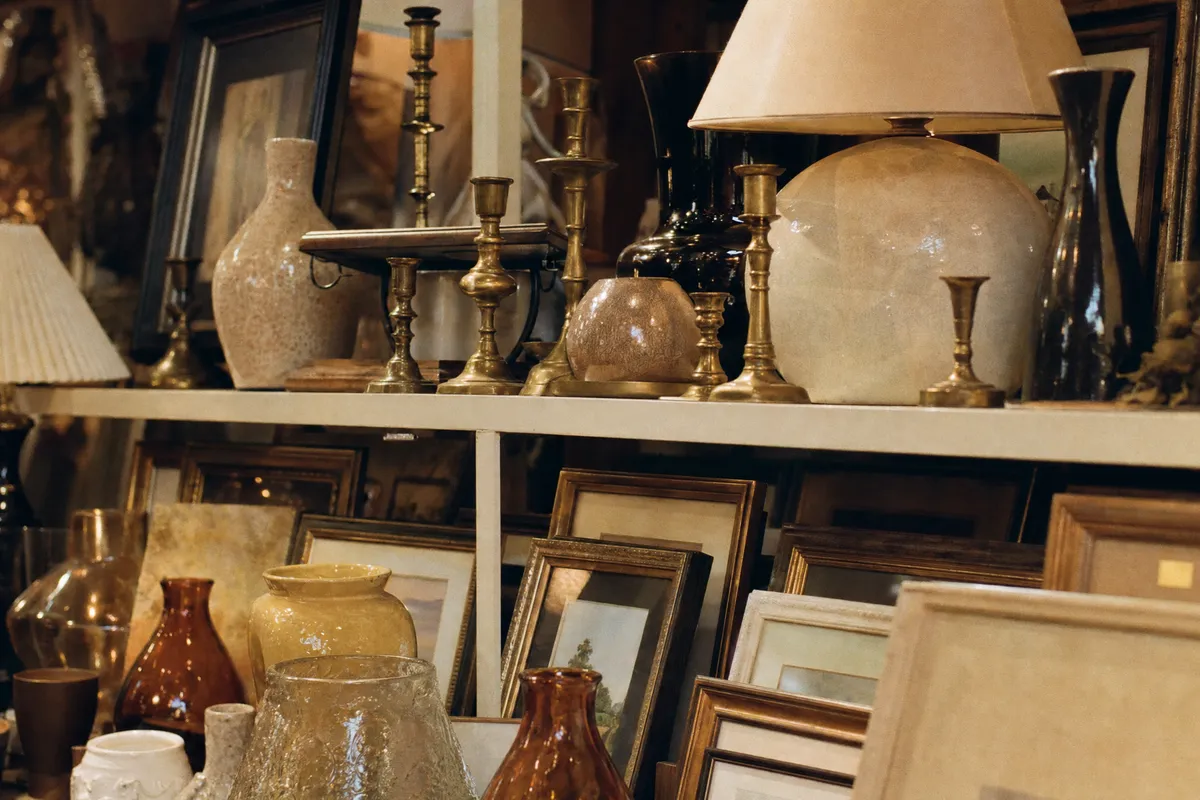
Take the measurements of one empty spot with you to the thrift store. A frame for the hallway or a bowl for a shelf gives the trip a useful limit. Without that limit, an inexpensive object can become another thing waiting for a place to live.
For a first decor flip, choose a small item you can use after a simple, appropriate cleaning. This guide is about furnishing your home, not predicting resale profit or identifying valuable antiques from a quick glance.
Start with frames and small decorative containers
For a frame, measure the opening as well as the outside dimensions. Check the corners, backing and any glazing for damage. Before buying, price whatever is missing: a new mat or piece of glass may change whether you want it.
Try a frame you like with a print or photograph you already own. A small frame can sit on a suitable stand; a wall arrangement needs mounting hardware appropriate to the weight and wall. The bookshelf styling guide offers ways to group smaller pieces once you know where they will go.
For a vase or decorative bowl, look for cracks, chips and a base that sits flat. Treat an unidentified vintage container as decor unless you can establish that it is suitable for food use. Pick the shape you want without paying extra for an unverified maker’s story.
Use the magnet as a clue, not an appraisal
The Canadian Conservation Institute’s metal guide describes brass as nonmagnetic and notes that brass-plated iron is magnetic. A magnet that sticks can help identify an iron component. A magnet that does not stick does not prove that an entire object is solid brass: other materials are nonmagnetic too.
Look for a maker’s mark and visible wear, but do not scratch the surface to investigate it. Buy an unidentified piece because you like it at the asking price. Leave authentication and valuation to someone qualified if the purchase depends on rarity.
Pause before polishing. The Institute’s brass and copper care guidance explains that polishing removes surface material and can affect finishes. Ask a conservator before treating an object that may be historically valuable.
Separate furniture repairs from cosmetic changes
Open the drawers and inspect accessible joints, legs and undersides with the seller’s permission. Look for broken parts and missing hardware. Do not treat weight or visible grain as proof of an entire piece’s construction.
For a beginner project, pass on structural repairs you cannot assess. Replacing a drawer knob is a different commitment from repairing a loose leg. Measure the furniture, the intended spot and the route it must travel into your home before paying.
Check the brand and model against the CPSC recall database. CPSC’s resale guidance warns that used products have caused injuries and been recalled. A thrift-store price tag is not a safety check.
Follow the original manufacturer’s assembly and anchoring instructions. If required components or instructions cannot be obtained, choose another piece rather than improvising a safety-critical repair.
Treat a lamp as an electrical item
A ceramic base can look appealing while its wiring needs attention. Do not plug in a lamp with damaged wiring, a loose socket or uncertain repairs. For a lamp you want enough to restore, ask a qualified lamp-repair professional to assess it and quote the work before you commit.
The budget should include that assessment, any repair and the correct shade or fittings. A rewiring kit price does not tell you what a particular old lamp needs. If the seller cannot provide enough information and you cannot arrange an assessment, leave it.
For a first project, a sound non-electrical vase is a simpler way to add the same sculptural shape to a shelf.
Inspect for pests before anything comes home
The EPA recommends checking secondhand furniture for bed bugs before bringing it indoors. Its inspection guide identifies hiding places including chair seams and drawer joints, so hard furniture is not exempt. Look for live insects, shed skins and suspicious dark spots in accessible crevices.
A clean-looking surface cannot guarantee an item is pest-free. If you find signs or cannot inspect the piece adequately, skip it or get professional pest advice before transport. Upholstery adds folds and enclosed areas to the inspection; for a simple decor trip, leaving it behind is a reasonable choice.
Do not rely on leaving furniture in a garage for a few days. The EPA reports that bed bugs can survive several months to a year without feeding. Nor should you assume a quick household spray makes a suspect item suitable to bring inside.
Write the total before buying
Use this small worksheet for any piece needing work:
| Item | Your amount |
|---|---|
| Purchase price | The actual store tag |
| Missing parts | A current quote or price for the correct part |
| Professional work | Repair or assessment quote, where needed |
| Transport | Delivery or suitable vehicle cost |
| Supplies | Only materials appropriate to the identified surface |
| Total | Add every amount above |
If a necessary repair is still unknown, the total is unfinished. Compare the completed amount with an item you could use immediately, and include whether you actually want the project.
There is no need to return with a find every trip. Buy the frame that fits the measured space; leave the lamp whose repair cost you cannot establish.